One tooth · three parts · four possible bills
Read an implant quote like a drawing
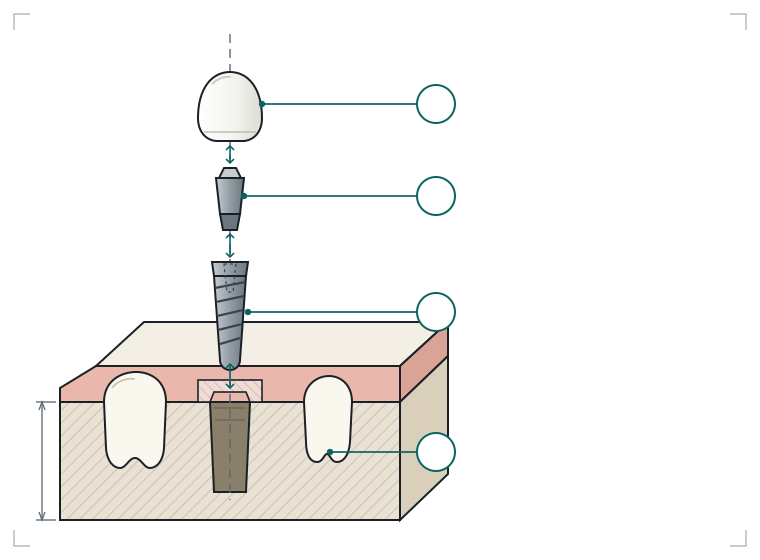
A dental implant is not one price — it is an assembly: a post in the bone, an abutment on the post, a crown on the abutment, and sometimes bone work underneath it all. Every part lands on your quote as its own line. Fixture File takes those lines apart, with a date and a named source on every figure.
Dated figures · named sources · no dentist on staff, and we say so
Latest sheets in the file
Open the file →Failing Dental Implant? Warning Signs to Act On
An implant rarely fails silently. The sourced early signals, the two-stage disease behind most late failures, and why the reversible window rewards speed.
Sheet →09Aug 13, 2026Free Dental Implants: Trials, Schools and Real Routes
“Free implants” is mostly a marketing phrase — but four real routes cut the bill to little or nothing, each with its own catch. Here they are, sourced, catches included.
Sheet →08Aug 8, 2026Bone Grafts and Sinus Lifts, Explained From the Drawing
When the jaw can't hold a post yet, bone gets built first. What grafts and sinus lifts actually are, where the material comes from, and what the wait really is.
Sheet →07Aug 3, 2026Do Dental Implants Hurt? Recovery, Day by Day
Numb during, sore for about a week after, quiet for months while bone fuses. What the guidance actually says about implant pain — and the signs that mean call now.
Sheet →06Jul 29, 2026How Long Do Dental Implants Last? The 10-Year Data
The honest lifespan answer has three parts: strong 10-year survival data for the post, a shorter clock on the crown, and a list of things that shorten both.
Sheet →What this site does
Fixture File answers one question in as many honest ways as it can be asked: what will a dental implant actually cost, and what is the money for? The main cost sheet collects every published price guide we could verify — an insurer's, a lender's, a pricing tool's — and pins each figure to the slice of the bill it covers, because they measure different slices and pretending otherwise is how people get misled. Around it sit sheets on the parts themselves, the famous $399 advertisements, insurance, bridges, bone grafts, recovery and warning signs.
The one thing to hold on to
There is no official price for a dental implant in the United States — no government schedule, no public ADA fee list. Every number anyone shows you, including every number here, is one organisation's own survey, tool or price list. So this site never says “an implant costs X”. It says who published X, when, and which parts of the assembly X pays for. The only figure that applies to your jaw is the itemised treatment plan a licensed dentist writes after examining you — everything on this site exists to help you read that document line by line.
What this site will not do
- It will not diagnose. Nobody here is a dentist, no page was reviewed by one, and whether an implant suits your bone, gums and health is a clinical call — the notice on every sheet says so.
- It will not invent a number. A cost with no source and no date does not appear, full stop. Where we found nothing we trust, the sheet says “no published figure”.
- It will not sell you a clinic. No implant chain, clinic or lender pays for placement here, and none is linked. The partners that can pay us — savings-plan marketplaces and a dentist-booking service — are named on the disclosure page and marked at every link.
- It will not bury the free routes. Dental schools, community health centers, state Medicaid where it covers adults, and clinical trials pay us nothing and are listed before anything that does.
Where to start
If you have a quote in hand, start with the cost sheets and hold your paperwork against them. If you are earlier than that — still weighing whether the gap gets a bridge or a post — start with bridge vs implant or the parts catalogue, then take the question to a dentist who has actually looked in your mouth.